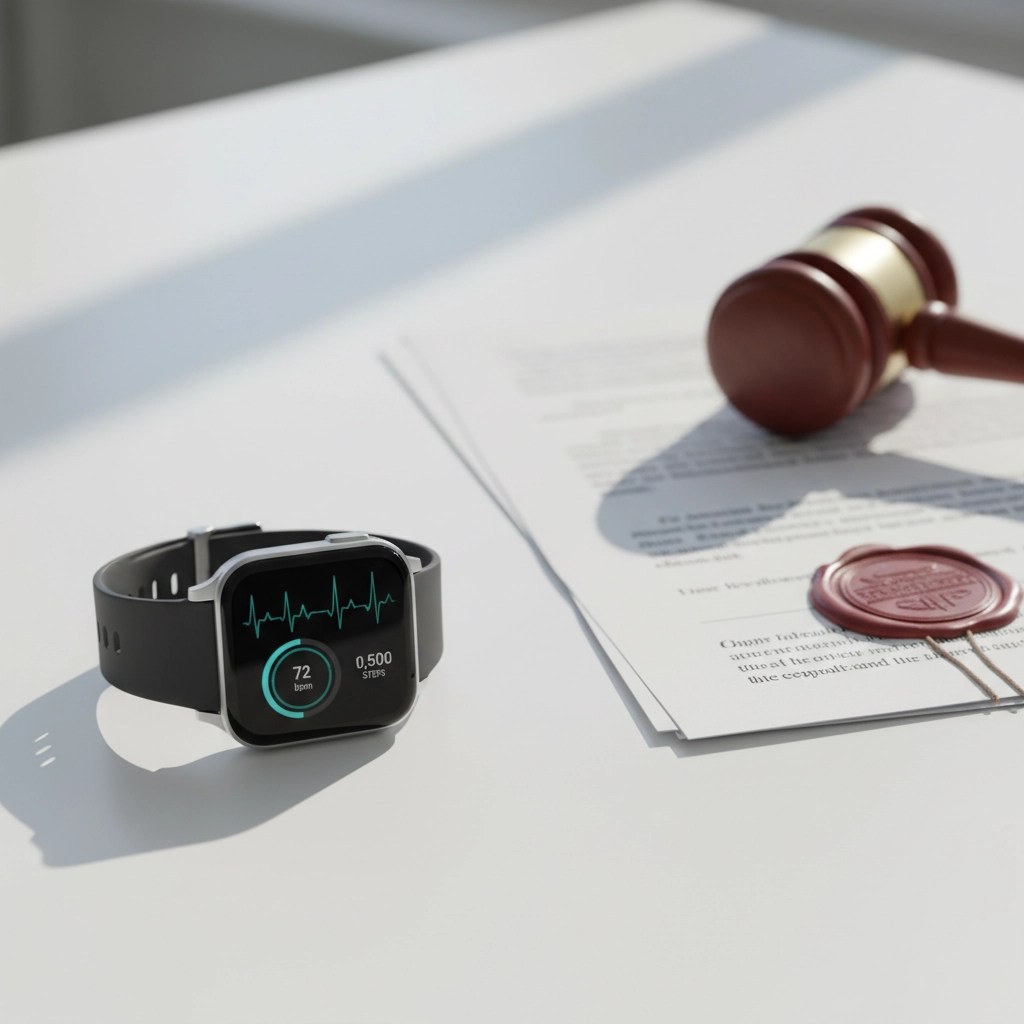
You’re wearing a goldmine on your wrist, and you don’t even know it.
That Apple Watch, Fitbit, or Garmin strapped to your arm isn’t just counting your steps, it’s creating an unbreakable digital chain of evidence that could dramatically increase your personal injury settlement. Most personal injury attorneys are still stuck in the Stone Age, overlooking this powerful evidence that’s literally at your fingertips.
Have you been injured in an accident? Your smartwatch data could be the difference between a modest settlement and the substantial compensation you actually deserve. Here’s what the insurance companies desperately don’t want you to know about wearable technology evidence.
The Digital Witness That Never Lies
Your smartwatch is the most honest witness you’ll ever have in court. Unlike human testimony that can be questioned, challenged, or dismissed as subjective, your wearable device creates objective, timestamped data that insurance companies cannot dispute.
DO NOT DELETE YOUR DEVICE DATA. We cannot stress this enough. The moment you’re involved in an accident, that device becomes crucial evidence. Your smartwatch has been silently documenting your life, and now it’s going to tell your injury story in a way that no medical record or witness testimony ever could.
What Your Device Actually Records
Your wearable technology captures far more than you realize. Every Apple Watch, Fitbit, Garmin, and Samsung Galaxy Watch continuously monitors:
Heart rate patterns before, during, and after traumatic events
Sleep quality disruptions that demonstrate ongoing pain and stress
Movement patterns revealing altered gait or mobility limitations
This isn’t just data, it’s your life story written in numbers that insurance adjusters cannot argue with.
How Wearable Evidence Transforms Your Case Value
Establishing Your Pre-Injury Baseline
The most powerful aspect of wearable evidence is what it shows about your life before the accident. Were you consistently active, logging 12,000 steps daily and maintaining regular exercise routines? Your device proves it. Did you enjoy quality sleep and stable heart rate patterns? The data is unshakeable.
This baseline evidence is worth its weight in gold. When your attorney presents evidence showing you were a healthy, active individual before the defendant’s negligence changed everything, juries pay attention. They see the dramatic before-and-after comparison that transforms abstract injury claims into concrete, undeniable proof of life-altering harm.
Documenting the Exact Moment of Impact
Your smartwatch doesn’t just track fitness, it records trauma. When you’re involved in a car accident, slip-and-fall incident, or workplace injury, your device captures physiological changes in real-time. Heart rate spikes, sudden location changes, and fall detection alerts create a digital timestamp of exactly when your life changed forever.
Insurance companies hate this evidence because it eliminates their favorite defense strategy: claiming the injury happened somewhere else, at a different time, or wasn’t caused by their insured’s negligence.
Proving Ongoing Pain and Suffering
Here’s where wearable technology becomes absolutely devastating to insurance company defense strategies. Your device documents:
Weeks of disrupted sleep patterns showing you’re waking up frequently due to pain
Elevated resting heart rates indicating ongoing stress and anxiety
Dramatically reduced activity levels proving your inability to maintain normal life activities
Irregular movement patterns demonstrating altered mobility and compensation behaviors
This objective evidence supports every dollar of pain and suffering damages you’re claiming. When your attorney presents months of sleep disruption data alongside your testimony about chronic pain, juries understand the true scope of your injuries.
Supporting Lost Wage Claims
Your smartwatch doesn’t just prove physical limitations, it demonstrates economic impact. If you were a construction worker averaging 15,000 steps per day before your injury, and now you struggle to reach 3,000 steps, your device proves your inability to perform your job functions.
This evidence is particularly powerful for workers whose jobs require physical activity. Your wearable data becomes mathematical proof of diminished earning capacity that goes far beyond simple medical restrictions.
The Legal Admissibility Game-Changer
Courts across California are increasingly accepting wearable device evidence, but only when it’s properly authenticated and presented by experienced counsel. This isn’t amateur hour, you need attorneys who understand both the technology and the legal standards required for admissibility.
Authentication Requirements
Your wearable data must meet strict evidentiary standards:
Chain of custody documentation proving the data hasn’t been tampered with
Device calibration evidence establishing accuracy and reliability
Expert witness testimony interpreting the data for judges and juries
Correlation with medical records showing consistency between device data and clinical findings
Most personal injury attorneys have no idea how to properly authenticate wearable evidence. They’ll either ignore it completely or present it so poorly that it gets excluded from evidence. This is exactly why you need specialized counsel who understands cutting-edge evidence presentation.
What Insurance Companies Don’t Want You to Know
Insurance adjusters are trained to minimize, dismiss, and undervalue your claim. But wearable technology evidence changes the entire negotiation dynamic. When faced with months of objective data proving your injuries, suddenly their lowball offers don’t seem so confident.
They’ll Try to Access Your Data
WARNING: Insurance companies will request access to your complete device history, hoping to find evidence that contradicts your injury claims. They’re looking for any activity that suggests you’re more capable than you claim.
NEVER provide raw device data without proper legal representation. Experienced counsel knows how to protect privileged information while presenting relevant evidence that supports your claim.
The Privacy Protection Strategy
Your wearable data contains intensely personal information that extends far beyond your injury. Insurance companies have no right to your complete health history, intimate relationship data, or private location information.
Skilled attorneys know how to extract and present only the relevant evidence while protecting your privacy rights. This surgical approach to evidence presentation maximizes your claim value while safeguarding personal information that has nothing to do with your case.
Maximizing Your Wearable Evidence Value
Immediate Post-Accident Steps
The moment you’re injured, your device strategy becomes critical:
DO NOT:
Delete any historical data
Stop wearing your device
Modify or reset device settings
Share raw data with anyone except your attorney
DO:
Continue wearing your device consistently
Document any device malfunctions or battery issues
Preserve charging records and usage patterns
Maintain regular syncing with manufacturer apps
Working with Technology-Savvy Legal Counsel
Not all personal injury attorneys understand wearable technology evidence. While other firms are still presenting cases like it’s 1995, we’re leveraging cutting-edge digital evidence to maximize our clients’ recoveries.
This isn’t reheated legal representation. This is gourmet advocacy that recognizes how technology can transform your case value. We don’t just practice law, we master the tools that win cases in 2025.
Real-World Case Value Impact
Consider this scenario: Without wearable evidence, your soft tissue injury case might settle for $15,000. But when your attorney presents six months of sleep disruption data, heart rate elevation patterns, and dramatically reduced activity levels, that same case becomes worth $75,000 or more.
The difference is objective proof of subjective suffering. Your device transforms vague pain complaints into mathematical certainty that juries and insurance companies cannot ignore.
The Compound Effect
Wearable evidence doesn’t just increase individual damage categories, it creates credibility that enhances your entire case. When every aspect of your testimony is supported by objective data, juries trust everything you’re saying. This credibility boost affects every dollar of your potential recovery.
Why Experience Matters More Than Ever
Generic personal injury attorneys are obsolete in the wearable technology era. You need counsel who understands both the legal landscape and the technical requirements for presenting digital evidence effectively.
At LA Law Group, we don’t just practice personal injury law, we master the evolving tools that maximize client recoveries. While our competitors are stuck using yesterday’s strategies, we’re pioneering tomorrow’s winning approaches.
Your smartwatch could be worth thousands in additional compensation, but only if you have attorneys who know how to unlock its potential.
Important Legal Disclaimer: This blog post is for informational purposes only and does not constitute legal advice. No attorney-client relationship is formed by reading this content. For specific legal advice regarding your personal injury claim and wearable device evidence, please contact LA Law Group directly. The use of wearable technology evidence in personal injury cases involves complex legal and technical considerations that require professional evaluation of your specific circumstances.
Your smartphone just became your worst enemy. Every photo, every check-in, every casual comment you post online is now potential ammunition for insurance companies determined to minimize your personal injury settlement. DO NOT UNDERESTIMATE how aggressively defense teams will scrutinize your digital footprint.
We’ve seen cases where six-figure settlements were reduced to mere thousands because of a single Facebook post. Others where legitimate injury claims were completely dismissed due to seemingly innocent social media activity. The harsh reality? Insurance companies employ teams of investigators whose sole job is to find contradictions between your injury claims and your online presence.
Most personal injury victims have no idea they’re sabotaging their own cases with every scroll, post, and share. This isn’t paranoia, it’s the new battleground of personal injury law. You need to understand exactly what mistakes could cost you everything, and more importantly, how to avoid them.
Mistake #1: Posting Photos or Videos of Physical Activities
THIS IS THE MOST DANGEROUS MISTAKE YOU CAN MAKE. We cannot emphasize this enough. That innocent video of you playing catch with your kids? It just cost you $50,000 in settlement money. The gym selfie showing your “recovery progress”? Defense attorneys are already printing it for court.
Insurance companies don’t care about context. They don’t care that you were pushing through excruciating pain to maintain some normalcy in your life. All they see is visual “proof” that contradicts your injury claims.
Consider this real scenario from our practice: A client with a documented herniated disc posted a short video helping their elderly neighbor move a couch. The insurance company’s investigator found this video and used it to argue that if our client could lift furniture, their back injury couldn’t be that severe. What the video didn’t show was our client taking muscle relaxers and spending the next two days in bed. Context doesn’t translate through a phone screen.
How to avoid this mistake completely:
Delete ALL social media apps from your phone during your case
If you must keep accounts active, post absolutely nothing involving any physical activity
This includes walking your dog, lifting groceries, attending your child’s soccer game, or even standing at a concert
Ask family members to avoid filming you during gatherings
Remember: Even activities that seem completely unrelated to your injury can be twisted against you. A video of you cooking dinner becomes “evidence” that your wrist injury isn’t limiting your daily activities. A photo of you standing at a wedding becomes “proof” that your back injury doesn’t prevent you from being on your feet.
Mistake #2: Discussing Your Accident, Injuries, or Legal Proceedings Online
Every word you type about your case becomes discoverable evidence. EVERY. SINGLE. WORD. That frustrated post about insurance companies? It makes you look vindictive. The update about feeling better? It contradicts your medical records. The joke about “hitting the jackpot” with your lawsuit? It destroys your credibility.
We’ve handled cases where clients made offhand comments like “can’t wait to get this settled so I can buy a new car.” Defense attorneys used these statements to argue that financial motivation, not actual injury, was driving the lawsuit. These seemingly innocent comments can reduce your settlement by tens of thousands of dollars.
The absolute rules for social media during your case:
NEVER mention your accident, even in passing
NEVER discuss your injuries or recovery process
NEVER reference your attorney, legal proceedings, or settlement negotiations
NEVER express opinions about fault or responsibility
NEVER make any statements that could be interpreted as admitting partial responsibility
Here’s what’s particularly insidious: insurance companies often use your own words out of context. A post saying “feeling a little better today” during a week-long recovery process becomes “evidence” that you’re exaggerating your ongoing pain. They’re not looking for the full story, they’re looking for sound bites to devalue your claim.
Mistake #3: Accepting Friend Requests from Unknown Profiles
Defense teams are creating fake profiles to spy on you. This isn’t conspiracy theory, it’s standard practice. Professional investigators create convincing fake accounts, complete with photos and histories, specifically to gain access to your private posts.
These aren’t obviously fake profiles with no photos and suspicious names. We’re talking about sophisticated deception: accounts that look like local professionals, parents from your child’s school, or mutual friends of friends. Once you accept their friend request, they have access to years of your private content.
Protecting yourself from social media espionage:
Accept ZERO friend requests from people you don’t know personally during your case
Review your current friend list and remove anyone you can’t identify
Set all privacy settings to maximum restriction
Disable location tracking on all social media platforms
Turn off the ability for others to tag you without approval
But here’s the critical point: Even maximum privacy settings might not protect you. During the discovery process, courts can order you to provide access to your social media accounts. The best protection is having nothing damaging to discover in the first place.
Mistake #4: Check-ins, Location Tags, and Activity Updates
Your location data is painting a picture that contradicts your injury claims. That check-in at the gym? It suggests you’re more mobile than your medical records indicate. The restaurant tag during a supposed period of severe pain? It implies you’re socializing normally despite your injuries.
Here’s a case that will shock you: We had a client with legitimate soft tissue injuries from a rear-end collision. Three months into treatment, she attended her daughter’s graduation ceremony, an event planned long before the accident. She checked in at the venue and posted photos of the ceremony. The defense used these posts to argue that if she could attend a three-hour graduation ceremony, she must be exaggerating her pain levels.
The reality is more complex: Our client attended the ceremony despite significant discomfort, took frequent breaks, and left early due to pain. But social media doesn’t capture that nuance. All it shows is presence and apparent enjoyment.
Eliminate location-based evidence against you:
NEVER use location services on any social media platform
Disable automatic location tagging on all apps
Don’t check in anywhere during your case period
Be aware that others can tag your location even if you don’t
Mistake #5: Allowing Friends and Family to Tag You or Post About You
You’re not just responsible for your own social media activity, you’re vulnerable to everything your network posts about you. This is where many careful clients get blindsided. They’ve been meticulous about their own posting, but their spouse shares a video of them playing with the kids, or their friend tags them in vacation photos.
These third-party posts are equally damaging and equally admissible as evidence. Insurance investigators don’t just monitor your accounts, they scrutinize posts from anyone in your social circle who might feature you.
Creating a family social media strategy:
Have explicit conversations with family and close friends about your legal situation
Ask them to refrain from posting anything featuring you during your case
Request that they don’t tag you in any posts or photos
Set your account to require approval for all tags before they appear on your profile
Monitor your mentions and ask people to remove problematic posts immediately
Here’s what most people don’t realize: You can be held responsible for content posted by others if you’re aware of it and don’t request its removal. If your brother posts a video of you lifting weights and you see it but don’t ask him to take it down, that can be used as evidence that you agreed with the portrayal of your physical capabilities.
The Safest Strategy: Complete Social Media Silence
The most effective protection during a personal injury case is complete social media abstinence. This isn’t just about avoiding problematic posts, it’s about removing the entire avenue for attack.
Consider this: Is any social media post worth potentially losing tens of thousands of dollars in compensation? Every photo, every update, every casual comment is a gamble with your financial recovery.
If you absolutely must maintain some online presence:
Limit activity to “liking” other people’s posts only
Post nothing original
Avoid any content that could be interpreted as showing physical capability
Remember that even positive, unrelated posts can be twisted to show that you’re not suffering as claimed
Why Insurance Companies Win the Social Media Game
Insurance companies have turned social media monitoring into a science. They employ investigators who specialize in finding contradictions between injury claims and online activity. These professionals are trained to find problems where none exist.
They understand that juries relate to social media. A photo shown to twelve jurors carries more emotional weight than pages of medical records. Visual “evidence” from your own accounts is more compelling to juries than expert medical testimony.
This is why we tell clients that social media mistakes aren’t just damaging, they can be case-ending. No amount of medical documentation can overcome the impression created by a video that appears to contradict your limitations.
Your Legal Team Needs Complete Transparency
Be completely honest with your attorney about your social media presence. Trying to hide problematic posts only makes things worse when they’re inevitably discovered during the legal process.
We’ve seen clients attempt to delete damaging content after their accident, not realizing that deleting posts after an incident can be considered destruction of evidence. This can result in sanctions against you and severely damage your case’s credibility.
The most important thing you can do right now: Download copies of all your social media content before making any changes. This creates a record that you’re preserving rather than destroying evidence.
Remember, this content is not intended as legal advice, and no attorney-client relationship is created by reading this post. For specific legal guidance regarding your personal injury case and social media strategy, contact our law offices directly.
Your digital footprint can either support or sink your personal injury claim. Make the choice that protects your financial recovery, stay off social media until your case is resolved. The temporary inconvenience of social media silence is nothing compared to the permanent financial impact of a reduced settlement due to online mistakes.
The information provided in this blog post is for educational purposes only and does not constitute legal advice. No attorney-client relationship is formed by reading or commenting on this post. For legal advice specific to your situation, please contact LA Law Group directly.
The decision you make in the first 72 hours after your car accident will likely determine whether you receive fair compensation or settle for pennies on the dollar. Most victims in Los Angeles make critical errors when selecting legal representation, mistakes that cost them hundreds of thousands of dollars in lost compensation.
Do you want to know the harsh reality? Insurance companies have teams of experienced attorneys working around the clock to minimize what they pay you. Meanwhile, you’re likely dealing with injuries, medical bills, and lost wages while trying to navigate an incredibly complex legal system. This is not the time for trial and error with your legal representation.
After handling thousands of car accident cases in Los Angeles, we’ve witnessed the devastating consequences when victims choose the wrong attorney. The difference between exceptional legal representation and mediocre service isn’t just measured in dollars, it’s measured in your ability to rebuild your life after a traumatic accident.
Mistake #1: Hiring a “Jack-of-All-Trades” Attorney Instead of a Car Accident Specialist
DO NOT assume that any licensed attorney can effectively handle your car accident case. This is perhaps the most costly mistake we see victims make repeatedly.
Would you hire a family doctor to perform brain surgery? Of course not. Yet countless accident victims hire general practice attorneys, or worse, attorneys who primarily handle divorces or business law, to represent them in complex personal injury cases.
Car accident law in Los Angeles involves intricate knowledge of California’s comparative fault rules, understanding of medical terminology and injury progression, familiarity with accident reconstruction techniques, and deep relationships with expert witnesses who can make or break your case. A general practice attorney simply cannot match the expertise of a specialist who dedicates their entire practice to car accident cases.
Consider this: Insurance companies employ specialized teams of attorneys who focus exclusively on minimizing accident claims. They know exactly which opposing attorneys lack experience and will offer significantly lower settlements to those lawyers. Your choice of attorney literally broadcasts to the insurance company how seriously they need to take your claim.
Mistake #2: Choosing a Firm That Operates Like a “Legal Mill” Rather Than Providing Personalized Service
Many accident victims fall prey to firms that advertise heavily but treat cases like items on an assembly line. These “legal mills” may handle thousands of cases simultaneously, with minimal attorney involvement in each individual matter.
Here’s what happens when you become just another number: Your case gets assigned to paralegals or junior associates with limited experience. The firm pushes for quick settlements regardless of whether they adequately reflect your damages. You rarely speak directly with an attorney, and when settlement time arrives, you discover your case received minimal investigation and preparation.
This is not “reheated” law. This is fast-food legal service designed to maximize the firm’s volume rather than maximize your compensation. While McDonald’s may serve the most clients, this is far from fact to presume that their product is the ‘best.’
At LA Law Group, we devote the time, skill, and resources necessary to each and every individual client. Your case receives personalized attention from experienced attorneys who understand that your recovery depends on thorough preparation and aggressive advocacy.
Mistake #3: Selecting an Attorney Who Avoids the Courtroom
Insurance companies maintain detailed databases tracking which attorneys actually take cases to trial. If your attorney has a reputation for settling every case without litigation, insurance companies will offer substantially lower settlements knowing your lawyer won’t fight for maximum compensation.
Many attorneys advertise their ability to handle car accident cases but lack the courtroom experience necessary to present your case effectively before a jury. The harsh reality is that some attorneys are simply afraid of the courtroom. They may have law degrees, but they lack the trial skills and confidence required to advocate effectively for accident victims.
Do you want to know the difference trial readiness makes? When insurance companies know your attorney has successfully tried similar cases before juries, they approach settlement negotiations very differently. They understand that if they don’t offer fair compensation, your attorney has both the skill and willingness to present your case to a jury that may award significantly more than the insurance company wants to pay.
This leverage is absolutely critical in maximizing your compensation. Without trial-ready representation, you’re essentially negotiating with one hand tied behind your back.
Mistake #4: Waiting Too Long to Secure Legal Representation
Time is your enemy after a car accident. Every day you delay hiring qualified legal representation is another day that critical evidence disappears and your case weakens.
Consider what happens while you’re “thinking about it”: Witnesses forget details or become impossible to locate. Physical evidence from the accident scene gets cleaned up or altered. Surveillance footage gets deleted. The insurance company’s investigators are gathering evidence immediately, evidence they’ll use to minimize or deny your claim.
Meanwhile, you’re likely dealing with injuries, medical appointments, and the overwhelming stress of recovery. This is precisely when you need an experienced attorney handling the legal complexities while you focus on healing.
California’s statute of limitations provides a deadline for filing personal injury lawsuits, but waiting until the last minute severely compromises your case’s strength. The most compelling evidence and the strongest witness testimony are available immediately after your accident, not months or years later.
Mistake #5: Falling for Unrealistic Promises and Poor Communication
BEWARE of attorneys who guarantee specific outcomes or promise unrealistic settlements during initial consultations. Ethical attorneys understand that every case is unique, and while they can discuss potential ranges based on similar cases, they cannot guarantee specific results.
Red flags include attorneys who:
Promise exact settlement amounts before investigating your case
Guarantee they can “get you more money than anyone else”
Fail to explain the challenges or weaknesses in your claim
Don’t return phone calls or respond to emails promptly
Refuse to discuss their fee structure clearly
Quality legal representation involves honest communication about both the strengths and challenges of your case. You deserve an attorney who explains the legal process clearly, keeps you informed about developments, and provides realistic expectations about potential outcomes.
Poor communication often indicates an attorney who’s overwhelmed with too many cases or lacks the organizational systems necessary to handle complex litigation effectively.
What Exceptional Car Accident Representation Actually Looks Like
When you work with LA Law Group, you receive gourmet legal service tailored specifically to your unique circumstances. Our approach differs fundamentally from the “fast-food” legal services offered by many firms.
Immediate Action: We begin investigating your case immediately, preserving critical evidence and interviewing witnesses while memories remain fresh. Our team includes experienced investigators who know exactly what evidence insurance companies try to hide or destroy.
Medical Expertise: We maintain relationships with leading medical professionals who can accurately document your injuries and provide compelling testimony about your prognosis and future medical needs. Your compensation should reflect not just your current medical bills, but the lifetime impact of your injuries.
Trial Readiness: Every case we accept receives full preparation as if it’s going to trial. This preparation creates leverage during settlement negotiations and ensures we’re ready to advocate effectively before a jury if necessary.
Direct Attorney Access: You work directly with experienced attorneys, not paralegals or case managers. We believe you deserve to speak with the lawyers actually handling your case, not support staff who may not understand the legal complexities involved.
Resource Investment: We advance all case expenses, including expert witness fees, medical record acquisition, and investigation costs. You pay nothing upfront and only pay if we successfully recover compensation for you.
The Stakes Are Too High for Mediocre Representation
Your choice of attorney will likely determine whether you receive compensation that adequately covers your medical bills, lost wages, and pain and suffering, or whether you settle for a fraction of what your case is truly worth.
Most Amazon sellers have faced suspension at one point or another and recognize this horrible experience, but car accident victims often get only one chance to secure fair compensation. Unlike business disputes that can sometimes be revisited, personal injury settlements typically involve releasing all future claims related to your accident.
Do you really want to risk your financial future on an attorney who treats your case like just another file in their stack? The difference between exceptional representation and mediocre service isn’t just measured in dollars, it’s measured in your ability to rebuild your life after a traumatic accident.
Take Action Now, Your Recovery Depends on It
If you’ve been injured in a car accident in Los Angeles, contact LA Law Group immediately for a free consultation. We’ll review your case, explain your legal options, and provide honest guidance about the best path forward.
Remember: The insurance company has experienced attorneys working to minimize what they pay you. Shouldn’t you have experienced attorneys fighting to maximize what you receive?
Don’t let poor legal representation cost you the compensation you need and deserve. Contact us today, your future may depend on the decision you make right now.
Legal Disclaimer: This blog post provides general information about car accident law and attorney selection. It does not constitute legal advice, nor does reading this post create an attorney-client relationship. Every legal situation is unique and requires individual analysis. For specific legal advice regarding your car accident case, please contact LA Law Group to schedule a consultation with our experienced attorneys.
If you’ve been injured in Riverside County, you’re not alone, and you’re facing a crisis that demands immediate, expert legal intervention. The stark reality is that Riverside County ranks among California’s most dangerous regions for traffic accidents, with 267 pedestrian deaths recorded over just six years and intersections that see hundreds of crashes annually.
DO NOT attempt to navigate your personal injury claim alone. Insurance companies know these statistics better than anyone, and they’re counting on your inexperience to minimize their payouts. You need an attorney who understands the specific dangers of Riverside County’s roadways and has a proven track record of securing maximum compensation for victims.
The Alarming Reality of Riverside County Accidents
Pedestrian Death Crisis
The numbers don’t lie: 267 pedestrians lost their lives in vehicle accidents across Riverside County during a recent six-year period. This represents a public health emergency that directly translates into complex wrongful death and catastrophic injury cases requiring specialized legal expertise.
Most of these fatal collisions occurred at intersections, where the combination of high-speed traffic, poor visibility, and driver negligence creates a perfect storm of devastation. When drivers flee the scene, an increasingly common occurrence, the legal complexities multiply exponentially.
The Primary Culprits Behind These Tragedies
Driver error dominates Riverside County accident statistics, whether involving passenger cars, commercial trucks, or public transit buses. The most frequent causes include:
Failure to yield right of way in marked crosswalks
Running red lights and stop signs at critical intersections
Texting while driving and other forms of distracted driving
Speeding through residential and commercial zones
Impaired driving during evening and weekend hours
Common Injury Patterns
Victims in Riverside County typically suffer from:
Traumatic brain injuries from high-impact collisions
Spinal cord injuries leading to permanent disability
Internal organ damage from truck and bus accidents
Severe lacerations and road rash from motorcycle crashes
Riverside County’s Most Dangerous Intersections: Where You’re Most at Risk
Van Buren Boulevard: The County’s Deadliest Corridor
Van Buren Boulevard has earned the dubious distinction of hosting Riverside County’s most dangerous intersections. Van Buren Boulevard and Arlington Avenue recorded an staggering 186 crashes over a 10-year period, making it statistically the most hazardous intersection in the entire region.
Additional Van Buren danger zones include:
Van Buren and Jurupa Avenue: 164 documented accidents
Van Buren and Trautwein Road: 153 recorded crashes
Van Buren and Indiana Avenue: 145 collision incidents
Other High-Risk Intersection Hotspots
Tyler Street and Magnolia Avenue ranks as the county’s second-most dangerous intersection with 181 documented accidents. This intersection presents unique challenges due to heavy commercial traffic mixing with residential commuter patterns.
Winchester Road and Ynez Road in Temecula represents a particular hazard for Riverside County’s southern communities, while Bridge Street and Gilman Springs Road in Moreno Valley creates significant risks for eastern county residents.
The “Three Interchange” Nightmare
The I-215/I-91/SR-60 Interchange, known locally as the “Three Interchange”, presents perhaps the most complex and dangerous driving environment in all of Riverside County. This massive interchange sees:
Extreme traffic volumes during peak commuting hours
Complex weaving movements that confuse unfamiliar drivers
High-speed merging that leaves little room for error
Last-minute lane changes by drivers navigating the interchange
If you’ve been injured at this location, you’re dealing with a case that likely involves multiple insurance companies, complex fault determinations, and potentially catastrophic injuries requiring lifelong care.
Riverside County’s Top Personal Injury Attorneys: Who You Need in Your Corner
DO NOT Choose Based on Advertising Volume
Here’s what most people don’t understand: The attorneys spending the most on billboards and television commercials are often running volume practices that treat your case like a fast-food transaction. You deserve better. You deserve an attorney who recognizes that your Riverside County accident case requires specialized knowledge of local traffic patterns, dangerous intersections, and the specific challenges of Inland Empire litigation.
LA Law Group: brings over three decades of experience specifically handling Southern California traffic accidents. Unlike attorneys who dabble in personal injury as a side practice, Brandt’s firm has built their entire reputation on securing maximum compensation for car accident victims throughout Riverside County.
Truck Accident Expertise
LA Law Group maintains a dedicated trucking accident practice, understanding the federal regulations, insurance complexities, and catastrophic injury patterns that distinguish truck accidents from standard vehicle collisions.
Motorcycle Accident Representation
Motorcycle accidents in Riverside County present unique legal challenges due to bias against riders and the severity of injuries typically involved. You need an attorney who understands motorcycle dynamics, protective gear standards, and the specific intersection hazards that create motorcycle accident hotspots throughout the county.
Pedestrian Accident Advocates
Given Riverside County’s alarming pedestrian death statistics, several firms have developed specialized pedestrian accident practices:
Multi-Practice Personal Injury Leaders
Alexander D. Napolin, Esq. represents a trial attorney who specializes across the full spectrum of personal injury law, from auto accidents to catastrophic injuries, mass torts, wrongful death, and multi-plaintiff litigation. Napolin serves the entire Inland Empire, including Riverside County, Orange County, San Bernardino County, and Los Angeles County areas.
Harlan B. Kistler Law Offices operates with over 30 years of experience securing substantial compensation across diverse personal injury cases. This extensive experience proves invaluable when dealing with the complex intersection of traffic law, insurance coverage, and medical documentation required in serious Riverside County accidents.
The Boutique Advantage
The Law Offices of Mark Gonzales takes a different approach entirely, preparing every case for trial rather than quick settlement. This strategy often results in significantly higher compensation because insurance companies know Gonzales won’t accept lowball offers.
WARNING: Time Is Running Out
California law provides only a two-year statute of limitations for filing personal injury claims. However, critical evidence disappears within hours of your accident:
Surveillance footage gets automatically deleted
Witness memories fade or become unreliable
Physical evidence at accident scenes gets cleaned up
Medical documentation requires immediate compilation
DO NOT WAIT. Every day you delay contacting an experienced Riverside County personal injury attorney reduces your chances of maximum compensation.
Why LA Law Group Stands Apart
While other firms treat personal injury law like a commodity, we recognize that your Riverside County accident case requires artisanal legal craftsmanship. This isn’t “reheated” law practiced by attorneys who handle everything from divorce to DUI. This is gourmet legal service specifically tailored to the unique challenges of Riverside County personal injury litigation.
We understand the specific dangers of Van Buren Boulevard intersections. We know the complex traffic patterns at the Three Interchange. We’ve handled cases involving every dangerous intersection mentioned in this article, and we’ve secured substantial compensation for clients injured at these exact locations.
Most importantly, we devote the time, skill, and resources necessary to each and every individual client. Your case isn’t a number in our system, it’s a fight for your future that deserves our complete attention and expertise.
Take Action Now
If you’ve been injured in Riverside County, do not speak to insurance adjusters before consulting with an experienced personal injury attorney. Insurance companies have teams of adjusters, investigators, and attorneys working immediately to minimize their liability. You need equal representation from day one.
Contact LA Law Group today for your free, no-obligation consultation. We’ll review the specific circumstances of your accident, explain your legal options, and provide honest guidance about the strength of your potential claim.
Call us now or visit our website to schedule your consultation. Don’t let insurance companies take advantage of your inexperience with Riverside County personal injury law.
This blog post is provided for informational purposes only and does not constitute legal advice. Reading this article does not create an attorney-client relationship. For specific legal advice regarding your personal injury case, please contact LA Law Group directly.
When you’re navigating the aftermath of a serious accident in San Jose, YOU NEED TO UNDERSTAND that this city presents unique challenges that demand specialized legal expertise. The statistics are sobering, the intersections are genuinely dangerous, and the legal landscape requires attorneys who have spent years mastering Santa Clara County’s specific court systems and insurance practices.
Most accident victims make the CRITICAL ERROR of assuming all personal injury attorneys possess equivalent knowledge about local accident patterns and courthouse dynamics. This assumption can cost you tens of thousands of dollars in compensation, or worse, result in a completely failed case.
The Harsh Reality: San Jose’s Accident Statistics Demand Immediate Action
Over a four-year period, San Jose recorded 24,565 traffic accidents. These weren’t minor fender-benders, 15,456 people sustained injuries, with 1,065 suffering severe, life-altering injuries. Most devastating of all, 278 people died in auto accidents during this timeframe.
Do you understand what these numbers really mean? Every single day in San Jose, approximately 16 traffic accidents occur, resulting in over 10 injured victims daily. This isn’t just statistical data, these are real people whose lives were permanently changed because someone else failed to exercise reasonable care.
The insurance companies operating in Santa Clara County know these statistics intimately. They’ve calculated precisely how much they expect to pay out annually, and they’ve hired teams of adjusters and attorneys whose SOLE PURPOSE is minimizing those payouts. When you’re recovering from injuries, dealing with medical bills, and trying to return to work, you’re fighting against a system designed to exploit your vulnerability.
San Jose’s Most Dangerous Intersections: Where Accidents Cluster
McLaughlin Avenue and Story Road stands as San Jose’s most dangerous intersection, recording 45 people injured over five years. This intersection alone demonstrates why generic legal representation fails, understanding the specific traffic patterns, signal timing, and pedestrian flow at this location requires intimate familiarity with San Jose’s infrastructure.
The following intersections consistently rank among the city’s most hazardous:
Almaden Expressway & Blossom Hill Road – High-speed thoroughfare with complex turning patterns
Capital Expressway & Ocala Avenue – Heavy commercial traffic mixed with residential access
Blossom Hill Road & Winfield Boulevard – Pedestrian crossing challenges during peak hours
Capital Expressway & Story Road – Industrial traffic creating visibility issues
Beyond intersections, entire corridors present elevated risks. East San Jose, particularly along Capitol Expressway and Tully Road, experiences accident clustering due to heavy industrial traffic mixing with residential patterns. The central part of the city near Downtown and Alum Rock creates additional complications where pedestrian traffic intersects with high-volume vehicle corridors.
Why Most Accident Victims Choose the Wrong Attorney
Here’s what the personal injury attorney advertisements WON’T TELL YOU: The lawyer who handled a successful case in Los Angeles, Sacramento, or even San Francisco may completely misunderstand San Jose’s specific challenges. Local knowledge isn’t a luxury, it’s absolutely essential.
Consider these critical factors that generic attorneys consistently overlook:
Traffic Engineering Expertise: San Jose’s intersections often involve complex signal timing, pedestrian crossing phases, and turn restrictions. An attorney who doesn’t understand how these engineering factors contribute to accidents cannot effectively demonstrate liability.
Local Court Procedures: Santa Clara County Superior Court operates with specific procedural requirements, judge preferences, and case management protocols. Attorneys who primarily practice elsewhere often struggle with these nuances, potentially compromising your case timeline and strategy.
Insurance Company Relationships: The major insurers operating in San Jose, State Farm, Allstate, Progressive, GEICO, each maintain local adjusters who work specific territories. Experienced local attorneys understand these adjusters’ settlement patterns and negotiation tendencies.
San Jose’s Premier Personal injury Law Firms: Who Actually Delivers Results
LA Law Group brings over 40 years of concentrated experience to San Jose and Northern California personal injury cases. Their reputation as premier trial attorneys stems from aggressive pursuit of full compensation through both settlement negotiations and jury trials. Their commitment to fighting for clients injured through others’ fault makes them a formidable choice
Motorcycle Accidents: San Jose’s Unique Challenges
San Jose’s climate encourages year-round motorcycle usage, but the city’s infrastructure creates specific hazards for motorcyclists. Highway 17, I-280, and U.S. Highway 101 present particular dangers due to steep grades, sharp curves, and sudden weather changes.
Motorcycle accident cases require attorneys who understand the physics of motorcycle crashes, the specific injuries these accidents typically produce, and the insurance industry’s systematic bias against motorcyclists. Caputo & Van Der Walde specializes in motorcycle accident cases and understands these unique challenges.
Pedestrian and Bicycle Accident Expertise
San Jose’s commitment to alternative transportation creates increased pedestrian and bicycle traffic, but the city’s infrastructure often fails to adequately protect these vulnerable road users. Solution Now Law Firm and Jacoby and Meyers maintain specific expertise in pedestrian accident cases, including complex crosswalk collision scenarios.
The key to successful pedestrian and bicycle accident cases lies in understanding traffic signal timing, pedestrian crossing phases, and the specific duties drivers owe to non-motorized road users under California Vehicle Code sections.
Truck Accident Complications in San Jose
San Jose’s position as a major distribution hub means constant heavy truck traffic through residential and commercial areas. Truck accidents involve federal regulations, commercial insurance policies, and complex liability questions involving trucking companies, drivers, and potentially cargo owners.
These cases demand attorneys with specific experience in commercial vehicle regulations, hours-of-service violations, and the unique discovery processes required to obtain trucking company records.
When You Need Immediate Legal Intervention
DO NOT DELAY if you’ve been injured in a San Jose traffic accident. California’s statute of limitations provides only two years for most personal injury cases, but waiting even a few weeks can compromise your case. Evidence disappears, witnesses forget crucial details, and your memory of the accident may become less precise.
More importantly, insurance adjusters begin working IMMEDIATELY to minimize their exposure. Every day you delay gives them additional time to build defenses against your claim.
The most successful personal injury cases begin with immediate attorney involvement, not months later when medical treatment concludes and bills accumulate.
Your Next Steps: Choosing the Right San Jose Personal Injury Attorney
When evaluating potential attorneys, demand specific answers to these critical questions:
How many cases have you handled in Santa Clara County Superior Court?
What is your experience with the specific type of accident that injured you?
Can you provide references from clients with similar cases?
What is your track record of settlements versus trial verdicts?
How will you personally be involved in my case versus junior associates?
Remember, this isn’t about finding the cheapest legal representation, it’s about protecting your future financial security and ensuring accountability for the negligence that injured you.
Legal Disclaimer: This blog post provides general information about personal injury law and should not be construed as legal advice. No attorney-client relationship is created by reading this post. Every case involves unique facts and circumstances that require individual legal analysis. For specific legal advice regarding your situation, please contact our law offices directly to schedule a consultation with one of our experienced attorneys.
When you’re facing a legal dispute in California, serving documents properly is absolutely critical to your case’s success. One small mistake in service can derail your entire lawsuit before it even begins. But here’s something most people don’t know: you don’t always need to hire an expensive process server to get the job done legally and effectively.
The Notice and Acknowledgment of Receipt (POS-015) offers a cost-effective alternative that can save you hundreds of dollars while ensuring proper service, when used correctly. However, this method comes with specific rules and deadlines that you cannot afford to mess up.
What Is the Notice and Acknowledgment of Receipt (POS-015)?
The Notice and Acknowledgment of Receipt, officially known as Judicial Council Form POS-015, is a standardized document issued by the California Judicial Council (https://www.courts.ca.gov) that allows you to serve legal documents through the mail instead of hiring a process server.
If you need to get started, you can download form POS-015 online. Since January 1, 2005, this form has been the go-to solution for individuals looking to complete service of process in a way that’s both efficient and recognized by the courts. The POS-015—also referred to as the Notice and Acknowledgment of Receipt—lays out all the necessary steps and serves as proof that the other party received your documents.
In short, it’s your ticket to serving legal papers without the extra cost or hassle of a professional server—provided you follow the rules closely..
This isn’t some informal arrangement, it’s a legally recognized method of service that carries the same weight as personal service when executed properly.
Think of POS-015 as a legal contract between you and the person you’re serving. They agree to acknowledge receipt of your documents, and in return, you’ve achieved valid service without the expense and coordination headaches of hiring a professional server.
Who Can Use POS-015—and Why Legal Professionals Rely on It
So, who actually benefits from the POS-015? The answer: just about anyone involved in a legal case—attorneys, law firm partners, paralegals, legal assistants, even self-represented individuals. This form levels the playing field by giving professionals and everyday people alike a streamlined way to fulfill the court’s requirements for serving documents.
For legal pros, using POS-015 isn’t just a matter of saving postage—it’s a way to avoid headaches down the line. When a recipient signs and returns the acknowledgment, there’s no room for them to claim they were left out of the loop or missed a deadline. This built-in layer of protection can prevent expensive, stressful disputes about whether service actually happened.
Bottom line: POS-015 provides both proof and peace of mind, making it a must-have tool for anyone serious about keeping their case on track and airtight.
Can You Use the Notice and Acknowledgment of Receipt (POS-015) in Small Claims Cases?
If you’ve been wondering whether POS-015 works for California small claims, you’re not alone. Here’s the inside scoop: while POS-015 is a widely accepted tool for serving documents in most civil cases, its use in small claims is, frankly, not the default route.
California small claims courts have their own rules—and their own form, SC-104 (Proof of Service). SC-104 is the form almost always referenced for proving service in small claims matters, and it doesn’t mention the Notice and Acknowledgment of Receipt as a standard option. Instead, small claims cases generally require:
Personal service (handing the papers directly to the other party)
Substituted service (leaving papers with someone at their home or work, then mailing a copy)
Service by mail only if the court clerk handles it (uncommon)
The POS-015 is specifically referenced and structured for general civil proceedings, which is why you’ll see mention of it—and its checkboxes—on forms like POS-010. In practice, most small claims courts won’t accept a POS-015 for proof of service unless you have explicit permission or a judge’s order.
So, while the acknowledgment method might seem ideal for the cost-conscious (and it does provide a rock-solid paper trail), stick to the official SC-104 in small claims unless you’re told otherwise by your court clerk. If you try using a process outside the specs, you risk the court rejecting your proof of service—which could mean delays or even dismissal.
Bottom line: For small claims, play it safe and follow the SC-104 instructions to the letter. If in doubt, call your local court clerk before getting creative with your service methods.
Related Forms and Common Searches
When it comes to the Notice and Acknowledgment of Receipt (POS-015), you’re not alone if you’ve stumbled across a few cousins or variations in your research. Californians navigating the service of process often look up:
Instructions for POS-010 (Proof of Service of Summons) to understand alternative service methods.
Questions like “Do I need to file the Notice and Acknowledgment of Receipt with the court?”—a common point of confusion.
Fillable and downloadable versions of POS-015 for easy printing and completion.
Guidelines on serving and acknowledging receipt via email, especially in family law or probate cases.
Variations on the form name, such as “POS 15” or specific forms used in family law and probate proceedings.
Legal references under the California Code of Civil Procedure (such as CCP 415.30) that govern how the form should be used.
Exploring these related topics helps ensure you’re following the proper steps and using the right paperwork for your unique legal scenario.
Why Using the Latest Court Forms Matters
Using the most current version of a court-approved form—like the POS-015—is more than just good housekeeping. Submitting outdated forms can lead to one of the most frustrating legal headaches: having your filing rejected outright by the court clerk.
Courts update their forms to reflect changes in the law, corrections, or new requirements. If you use an old copy pulled from a dusty file cabinet (or the forgotten depths of Google), you might unknowingly leave out crucial information or miss new mandatory language.
In short: Using the correct, up-to-date version helps your case move through the legal system smoothly—without unnecessary setbacks, delays, or extra costs. It’s a simple step that can save you a world of trouble down the line.
Why Use Fillable Legal Forms Like POS-015?
Opting for fillable versions of legal forms—whether it’s POS-015 or another official court document—comes with some practical advantages that can save you both time and sanity.
Immediate Access and Convenience: You can download the latest version instantly and fill it out on your computer, which means no deciphering messy handwriting or making endless trips to the printer.
Accuracy and Compliance: Many fillable forms are updated regularly, which helps you avoid the nightmare of submitting outdated documents that could be rejected by the court clerk.
Efficiency for Busy Filers: If you have multiple forms to complete, tools like Microsoft Word’s form-fill features let you handle everything at once, streamlining the paperwork avalanche.
Organization: Digital forms are easier to edit, review, and archive. No more hunting through piles of paper right before your deadline.
Widely Accepted: California courts recognize clean, professionally completed forms, so using a fillable template actually improves your chances of getting it right the first time.
Ultimately, using a fillable POS-015 is about reducing mistakes, dodging unnecessary costs, and keeping your case on track—without the hassle of endless paperwork or last-minute chaos.
Since When Has POS-015 Been in Use?
The POS-015 form has been an official part of California’s legal toolkit since the start of 2005. That means, for the past two decades, anyone navigating the Golden State’s legal system has had this option available to simplify and legitimize service by mail—no need for a parade of process servers at your door.
But here’s the critical part: this only works if the defendant cooperates. If they don’t sign and return the form, you’re back to square one and will need personal service anyway.
What Types of Proof of Service Forms Are There in California?
When it comes to serving legal documents in California, the Judicial Council wasn’t kidding around—they’ve got a buffet of official forms to cover nearly every imaginable method. Here’s a quick tour of the most common proof of service forms you might encounter during your legal journey:
Proof of Service of Summons: For those classic moments when you need to verify you served the initial court papers—summons, complaints, and so on.
Notice and Acknowledgment of Receipt (Civil): This is your go-to when you’re serving by mail and hoping the recipient sees reason (or at least finds a pen to sign the acknowledgment and send it back).
Proof of Personal Service (Civil): Used when someone delivers the documents in person—either with a handshake or a cheerful knock at the door.
Proof of Service by First-Class Mail: If you’re sending court papers via regular mail (excluding initial summons and complaints), this form documents the when and how.
Proof of Electronic Service: As California embraces technology, you might be serving documents via email or an e-filing system. This form backs up your digital paper trail.
In addition, there are a slew of attachments designed to specify:
Which documents were served (think: lists, exhibits, or even extra-long complaints)
Who received what, especially handy when you’re serving a small army of defendants or parties
No matter the method—mail, personal delivery, or electrons zipping across the web—there’s a specific form (or attachment) to make sure your service will hold up in court. Selecting the right form is just as important as serving the papers themselves, so double-check before you drop that envelope in the mailbox or click “send.”
Related Forms and Searches
While you’re navigating this paperwork maze, you might also stumble across forms and resources related to other legal needs, such as:
Acknowledgment Receipt for Borrowed Money: Useful when formalizing the receipt of loaned funds.
Release Judgment Lien for Car: Handy when clearing up a vehicle’s title after satisfying a court judgment.
And if you’re deep in the search trenches, these might pop up:
POS-010 instructions
Do I file a Notice and Acknowledgment of Receipt with the court?
POS-015 fillable form
Notice and Acknowledgment of Receipt via email
Family law notice and acknowledgment of receipt
CCP Notice and Acknowledgment of Receipt
Notice and acknowledgment of receipt (probate)
Whether your case is civil, family, or probate, or you’re just tracking down the right instructions, California’s court system has a tailored form and a matching set of rules for nearly every scenario. So, before you put pen to paper (or finger to keyboard), make sure you’re using the precise form for your situation. That way, your proof of service won’t just look official—it’ll actually be official.
The Step-by-Step Process: How POS-015 Actually Works
Understanding the exact process is crucial because any deviation can invalidate your service attempt. Here’s exactly what you need to do:
Step 1: Prepare Your Service Package
Your mailing package must include all four of these components:
A copy of the summons
A copy of the complaint (or other document being served)
A properly completed Notice and Acknowledgment of Receipt (Form POS-015)
A return envelope addressed to you with sufficient postage
DO NOT skimp on any of these elements. Missing even one component can invalidate the entire service attempt.
Step 2: Complete Form POS-015 Correctly
The POS-015 form requires specific information:
The recipient’s full legal name
A complete description of the documents being served
Your return address for mailing back the signed form
The date you’re mailing the package
Who Can Sign for a Business or Organization?
If you’re serving a business—whether it’s a corporation, partnership, unincorporated association, or any other type of entity—the rules are a bit different. The POS-015 form can’t just be signed by anyone at the company. It needs to be signed either by an official representative of that organization or by someone who’s legally authorized to accept service of process on its behalf.
That might be a registered agent, an officer (like a CEO or CFO), or another individual who has the authority to accept legal documents for the business. Double-check that the person who signs has this authority. If not, your service attempt won’t stick, and you’ll just be spinning your wheels.
What Other Forms Might You Need?
Navigating California civil procedure means dealing with more than just the POS-015. Depending on your case and how you serve documents, you may need a handful of other forms to get the job done right (and keep the court happy). Some of the most common forms used alongside the Notice and Acknowledgment of Receipt include:
Proof of Service of Summons: Confirms that the summons and complaint were properly served—think of it as the court’s official receipt.
Proof of Personal Service–Civil: Used when you’ve opted for in-person handoff instead of mail.
Proof of Service by First-Class Mail–Civil: If documents are mailed (but not using POS-015), you’ll use this to document proper service.
Proof of Electronic Service: For the digital age—proves documents were sent and received via email or e-filing.
Attachments for Documents or Persons Served: If you’re serving multiple documents or individuals, there are dedicated attachments for listing everything (and everyone) involved.
Each of these forms is issued by the California Judicial Council (the same folks behind POS-015) and helps keep your case on the rails—no matter how the paperwork travels. Using the right forms—and filling them out completely—is just as crucial as following the steps for POS-015. Skipping or misusing these can grind your progress to a halt, so double-check what your situation requires.
Step 3: Mail Everything Together
Send the complete package via regular mail to the defendant’s address. While certified mail isn’t required, many attorneys recommend it to create a paper trail proving the mailing date.
Step 4: Wait for the Response (But Not Forever)
The defendant has exactly 20 days from the mailing date to sign and return the form. This deadline is non-negotiable—California Rules of Court § 1.31 makes this crystal clear.
Here’s where it gets interesting: service is complete on the date the defendant signs the form, not when you receive it back. This means their 30-day deadline to respond to your lawsuit starts ticking from their signature date, not from when their signed form lands back in your mailbox.
Using POS-015 is an efficient way to tell the court, with a paper trail, that your legal documents got where they needed to go—and if everything goes smoothly, you’ve just sidestepped one of the costliest parts of starting a lawsuit.
Step 5: File Proof of Service With the Court
Once you get the signed POS-015 back, don’t stop there. You must file a completed Proof of Service with the court. Attach the original signed POS-015 form as your evidence. This officially notifies the court that the defendant was properly served and starts the countdown for their response.
To clarify, Form POS-015—Notice and Acknowledgment of Receipt—is the court’s way of confirming that the other party actually received the summons or legal papers in your civil case. In California, there are standard Acknowledgment forms tailored for different types of cases. For most routine civil matters—think breach of contract, personal injury, or landlord-tenant disputes—the form you’ll use is Judicial Council Form POS-015. If you’re dealing with a family law case, such as divorce or custody, the correct form is FL-117.
Using the right Acknowledgment form ensures your service is valid and recognized by the court—no mix-ups, no delays, and no headaches down the road. Always double-check you’re using the correct version for your type of case before sending anything out.
Filing this form, with the defendant’s original signature, is what assures the court that service was properly completed. It’s your paper trail, your receipt, and your protective shield if anyone later questions whether you played by the rules.
Be sure to keep a copy of everything for your records. If the court ever asks for proof, you’ll have the documentation ready to go.
If you don’t get the form back within 20 days, you’ll need to switch to personal service or another approved method. It’s not the end of the world—but it does mean going back to the drawing board (and possibly the checkbook, if you need a process server after all).
By following these steps to the letter, you’ll dramatically reduce the risk of a judge tossing your case due to improper service. A little diligence up front can save you a lot of stress—and money—down the line.
The Financial Reality: Why POS-015 Can Save You Serious Money
Let’s talk numbers. Professional process servers in California typically charge $75-$150 per service attempt, and that’s just for standard service within normal business hours. If you need rush service, weekend service, or multiple attempts, those costs skyrocket quickly.
Compare that to mailing costs: a few stamps, envelopes, and photocopying. You’re looking at less than $5 total for the entire service attempt. For businesses or individuals handling multiple legal matters, these savings add up fast.
But remember, this cost savings only materializes if the defendant actually returns the signed form. You cannot budget based on this method alone because you might still need to hire a process server as backup.
When POS-015 Works Best (And When It Doesn’t)
This service method excels in certain situations:
Ideal scenarios:
Serving business entities through their registered agents
Family law matters where parties are cooperating
Civil disputes between parties with ongoing communication
Initial service of summons and complaint
Cross-complaints and amended pleadings
When to avoid POS-015:
Hostile defendants who are likely to ignore legal documents
Time-sensitive matters where you can’t afford the 20-day wait
Subpoenas (which cannot be served this way)
Writs or other documents requiring immediate personal delivery
Cases where the defendant has already demonstrated non-cooperation
What Happens When Defendants Don’t Respond
Here’s the harsh reality: if the defendant doesn’t sign and return the POS-015 within 20 days, you get nothing. No service, no progress on your case, and you’ve lost valuable time that could have been spent on alternative service methods.
But it gets worse. Refusing to sign and return the Acknowledgment form doesn’t stop the lawsuit—at all. If the defendant ignores or refuses to cooperate, you (the plaintiff) simply have to serve them another way, like personal service. Here’s the kicker: if you’re forced to go that route, the defendant can be on the hook for the extra cost of this alternate service under California law (CCP section 415.30(d)). Trying to “dodge” service by not signing the acknowledgment isn’t clever or strategic—it’s pointless and could wind up being expensive for the defendant.
This is why experienced attorneys often pursue parallel service strategies. While waiting for the POS-015 response, they simultaneously locate the defendant for personal service. This way, if the acknowledgment method fails, they can immediately proceed with Plan B without losing momentum.
DO NOT make the mistake of assuming defendants will cooperate just because it’s easier for everyone. People facing lawsuits often react emotionally, not logically.
POS-015 is served under Section 415.30 of the California Code of Civil Procedure. This section covers service by mail, outlining the process and requirements for delivering legal documents in this manner. Understanding this detail ensures you’re following the proper legal protocol when using POS-015.
What signing POS-015 accomplishes:
Acknowledges receipt of the documents
Completes valid service as of the signature date
Starts the clock on response deadlines
What signing POS-015 does NOT do:
Constitute a general appearance in the case
Waive jurisdictional defenses
Admit that service was proper in all respects
Create any attorney-client relationship
Extend deadlines under Code of Civil Procedure section 1013
These distinctions matter because defendants sometimes worry that signing the acknowledgment form somehow hurts their legal position. It doesn’t, they’re simply acknowledging they received your documents, nothing more.
Strategic Considerations for Maximum Success
Smart use of POS-015 requires thinking beyond just the immediate service. Consider these tactical elements:
Before your case can move forward, you must notify the other parent (or potential parent) by formally delivering copies of the paperwork—a process known as service. The primary method for this is personal service, where the documents are physically handed to the other party.
Timing your service attempt: Don’t wait until the last possible moment before your statute of limitations expires. Give yourself enough buffer time to pursue personal service if the acknowledgment method fails.
Follow-up communication: A brief, professional phone call or email explaining the process can significantly increase your success rate. Many people ignore legal documents out of fear or confusion, not malice.
Registered agent strategy: When serving businesses, always direct your POS-015 to their registered agent for service of process. These agents expect legal documents and typically handle them promptly and professionally.
The Bottom Line: When POS-015 Makes Strategic Sense
The Notice and Acknowledgment of Receipt can be a powerful tool in your legal arsenal, but only when deployed strategically. It works best when you have reason to believe the defendant will cooperate, when you have adequate time buffers, and when you’re prepared with backup service methods.
This is not a magic bullet, it’s one option in a comprehensive service strategy. The most successful litigants understand when to use POS-015 and when to skip it entirely in favor of more reliable (though expensive) alternatives.
Remember, proper service is the foundation of your entire case. One mistake here can invalidate months of work and thousands of dollars in legal fees. When in doubt, consult with experienced counsel who understands the nuances of California service requirements.
At LA Law Group, we’ve guided countless clients through these service decisions, helping them balance cost-effectiveness with strategic reliability. Every case presents unique circumstances that demand customized approaches, not cookie-cutter solutions.
Important Legal Disclaimer: This blog post provides general information about California legal procedures and should not be considered legal advice. No attorney-client relationship is created by reading this content. Legal requirements and procedures can change, and every case presents unique circumstances. For specific legal advice regarding your situation, please contact LA Law Group or another qualified California attorney. The success of any legal strategy depends on the specific facts of your case and applicable law at the time of your matter.