

You’re wearing a goldmine on your wrist, and you don’t even know it.
That Apple Watch, Fitbit, or Garmin strapped to your arm isn’t just counting your steps, it’s creating an unbreakable digital chain of evidence that could dramatically increase your personal injury settlement. Most personal injury attorneys are still stuck in the Stone Age, overlooking this powerful evidence that’s literally at your fingertips.
Have you been injured in an accident? Your smartwatch data could be the difference between a modest settlement and the substantial compensation you actually deserve. Here’s what the insurance companies desperately don’t want you to know about wearable technology evidence.
The Digital Witness That Never Lies
Your smartwatch is the most honest witness you’ll ever have in court. Unlike human testimony that can be questioned, challenged, or dismissed as subjective, your wearable device creates objective, timestamped data that insurance companies cannot dispute.
DO NOT DELETE YOUR DEVICE DATA. We cannot stress this enough. The moment you’re involved in an accident, that device becomes crucial evidence. Your smartwatch has been silently documenting your life, and now it’s going to tell your injury story in a way that no medical record or witness testimony ever could.
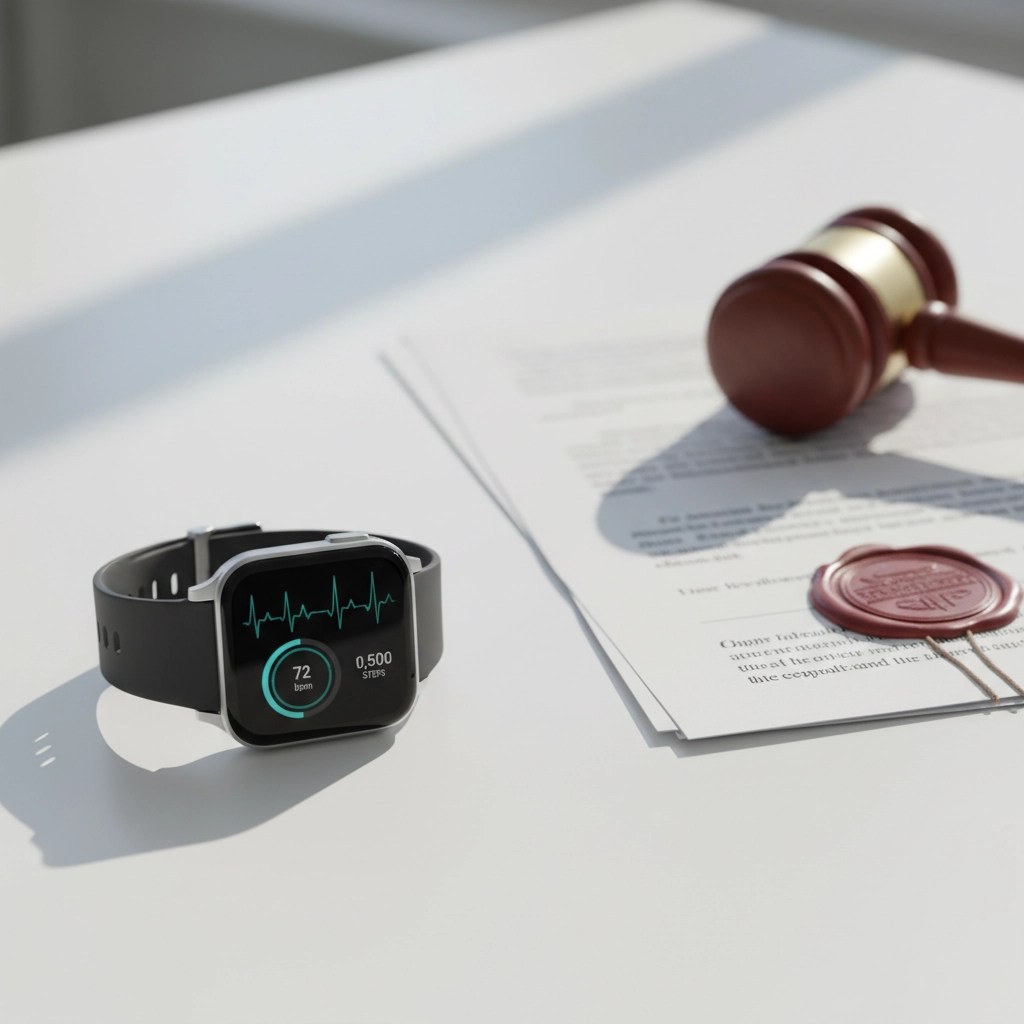
What Your Device Actually Records
Your wearable technology captures far more than you realize. Every Apple Watch, Fitbit, Garmin, and Samsung Galaxy Watch continuously monitors:
- Heart rate patterns before, during, and after traumatic events
- Sleep quality disruptions that demonstrate ongoing pain and stress
- Daily step counts showing dramatic activity level changes
- GPS location data confirming your presence at accident scenes
- Fall detection with precise timestamps of impact
- Blood oxygen levels indicating respiratory distress
- Exercise capacity demonstrating reduced physical capabilities
- Movement patterns revealing altered gait or mobility limitations
This isn’t just data, it’s your life story written in numbers that insurance adjusters cannot argue with.
How Wearable Evidence Transforms Your Case Value
Establishing Your Pre-Injury Baseline
The most powerful aspect of wearable evidence is what it shows about your life before the accident. Were you consistently active, logging 12,000 steps daily and maintaining regular exercise routines? Your device proves it. Did you enjoy quality sleep and stable heart rate patterns? The data is unshakeable.
This baseline evidence is worth its weight in gold. When your attorney presents evidence showing you were a healthy, active individual before the defendant’s negligence changed everything, juries pay attention. They see the dramatic before-and-after comparison that transforms abstract injury claims into concrete, undeniable proof of life-altering harm.
Documenting the Exact Moment of Impact
Your smartwatch doesn’t just track fitness, it records trauma. When you’re involved in a car accident, slip-and-fall incident, or workplace injury, your device captures physiological changes in real-time. Heart rate spikes, sudden location changes, and fall detection alerts create a digital timestamp of exactly when your life changed forever.
Insurance companies hate this evidence because it eliminates their favorite defense strategy: claiming the injury happened somewhere else, at a different time, or wasn’t caused by their insured’s negligence.

Proving Ongoing Pain and Suffering
Here’s where wearable technology becomes absolutely devastating to insurance company defense strategies. Your device documents:
- Weeks of disrupted sleep patterns showing you’re waking up frequently due to pain
- Elevated resting heart rates indicating ongoing stress and anxiety
- Dramatically reduced activity levels proving your inability to maintain normal life activities
- Irregular movement patterns demonstrating altered mobility and compensation behaviors
This objective evidence supports every dollar of pain and suffering damages you’re claiming. When your attorney presents months of sleep disruption data alongside your testimony about chronic pain, juries understand the true scope of your injuries.
Supporting Lost Wage Claims
Your smartwatch doesn’t just prove physical limitations, it demonstrates economic impact. If you were a construction worker averaging 15,000 steps per day before your injury, and now you struggle to reach 3,000 steps, your device proves your inability to perform your job functions.
This evidence is particularly powerful for workers whose jobs require physical activity. Your wearable data becomes mathematical proof of diminished earning capacity that goes far beyond simple medical restrictions.
The Legal Admissibility Game-Changer
Courts across California are increasingly accepting wearable device evidence, but only when it’s properly authenticated and presented by experienced counsel. This isn’t amateur hour, you need attorneys who understand both the technology and the legal standards required for admissibility.
Authentication Requirements
Your wearable data must meet strict evidentiary standards:
- Chain of custody documentation proving the data hasn’t been tampered with
- Device calibration evidence establishing accuracy and reliability
- Expert witness testimony interpreting the data for judges and juries
- Correlation with medical records showing consistency between device data and clinical findings
Most personal injury attorneys have no idea how to properly authenticate wearable evidence. They’ll either ignore it completely or present it so poorly that it gets excluded from evidence. This is exactly why you need specialized counsel who understands cutting-edge evidence presentation.

What Insurance Companies Don’t Want You to Know
Insurance adjusters are trained to minimize, dismiss, and undervalue your claim. But wearable technology evidence changes the entire negotiation dynamic. When faced with months of objective data proving your injuries, suddenly their lowball offers don’t seem so confident.
They’ll Try to Access Your Data
WARNING: Insurance companies will request access to your complete device history, hoping to find evidence that contradicts your injury claims. They’re looking for any activity that suggests you’re more capable than you claim.
NEVER provide raw device data without proper legal representation. Experienced counsel knows how to protect privileged information while presenting relevant evidence that supports your claim.
The Privacy Protection Strategy
Your wearable data contains intensely personal information that extends far beyond your injury. Insurance companies have no right to your complete health history, intimate relationship data, or private location information.
Skilled attorneys know how to extract and present only the relevant evidence while protecting your privacy rights. This surgical approach to evidence presentation maximizes your claim value while safeguarding personal information that has nothing to do with your case.
Maximizing Your Wearable Evidence Value
Immediate Post-Accident Steps
The moment you’re injured, your device strategy becomes critical:
DO NOT:
- Delete any historical data
- Stop wearing your device
- Modify or reset device settings
- Share raw data with anyone except your attorney
DO:
- Continue wearing your device consistently
- Document any device malfunctions or battery issues
- Preserve charging records and usage patterns
- Maintain regular syncing with manufacturer apps

Working with Technology-Savvy Legal Counsel
Not all personal injury attorneys understand wearable technology evidence. While other firms are still presenting cases like it’s 1995, we’re leveraging cutting-edge digital evidence to maximize our clients’ recoveries.
This isn’t reheated legal representation. This is gourmet advocacy that recognizes how technology can transform your case value. We don’t just practice law, we master the tools that win cases in 2025.
Real-World Case Value Impact
Consider this scenario: Without wearable evidence, your soft tissue injury case might settle for $15,000. But when your attorney presents six months of sleep disruption data, heart rate elevation patterns, and dramatically reduced activity levels, that same case becomes worth $75,000 or more.
The difference is objective proof of subjective suffering. Your device transforms vague pain complaints into mathematical certainty that juries and insurance companies cannot ignore.
The Compound Effect
Wearable evidence doesn’t just increase individual damage categories, it creates credibility that enhances your entire case. When every aspect of your testimony is supported by objective data, juries trust everything you’re saying. This credibility boost affects every dollar of your potential recovery.
Why Experience Matters More Than Ever
Generic personal injury attorneys are obsolete in the wearable technology era. You need counsel who understands both the legal landscape and the technical requirements for presenting digital evidence effectively.
At LA Law Group, we don’t just practice personal injury law, we master the evolving tools that maximize client recoveries. While our competitors are stuck using yesterday’s strategies, we’re pioneering tomorrow’s winning approaches.
Your smartwatch could be worth thousands in additional compensation, but only if you have attorneys who know how to unlock its potential.
Important Legal Disclaimer: This blog post is for informational purposes only and does not constitute legal advice. No attorney-client relationship is formed by reading this content. For specific legal advice regarding your personal injury claim and wearable device evidence, please contact LA Law Group directly. The use of wearable technology evidence in personal injury cases involves complex legal and technical considerations that require professional evaluation of your specific circumstances.


