
Amazon's Returns Policy A Seller's Legal Guide (2026)

A return hits your account. The buyer selected “item defective,” but when the package comes back, the product is used, the accessories are missing, or the box contains something else entirely. You still have to sort out the refund, the inventory disposition, the claim window, and the risk that one bad return turns into an account-health problem.
That’s where many sellers get trapped. They treat amazon’s returns policy like a simple customer-service rule. It isn’t. It’s a platform-wide risk system that affects reimbursement rights, listing strategy, documentation practices, and in some situations, legal exposure.
For smaller brands, one questionable return can wipe out the profit on several clean orders. For larger operators, repeated returns can become a workflow failure that quietly drains margin and creates avoidable disputes. Sellers who understand the system early usually make better decisions about fulfillment, evidence preservation, and escalation.
A practical note before going further. This article is for informational purposes only and is not legal advice. Reading it does not create an attorney-client relationship. No attorney client relationship exists based on the review of this article, and none of the information in this article is legal advice.
Your Guide to Amazon’s Complex Return System
Sellers usually start paying close attention to amazon’s returns policy after a painful return. A ceramic planter arrives back in pieces. A buyer reports the wrong color, but the returned item shows signs of use. A premium item comes back incomplete, and the refund has already moved faster than your internal review. Those are not edge cases in practice. They are part of doing business on a marketplace built around low-friction buyer confidence.
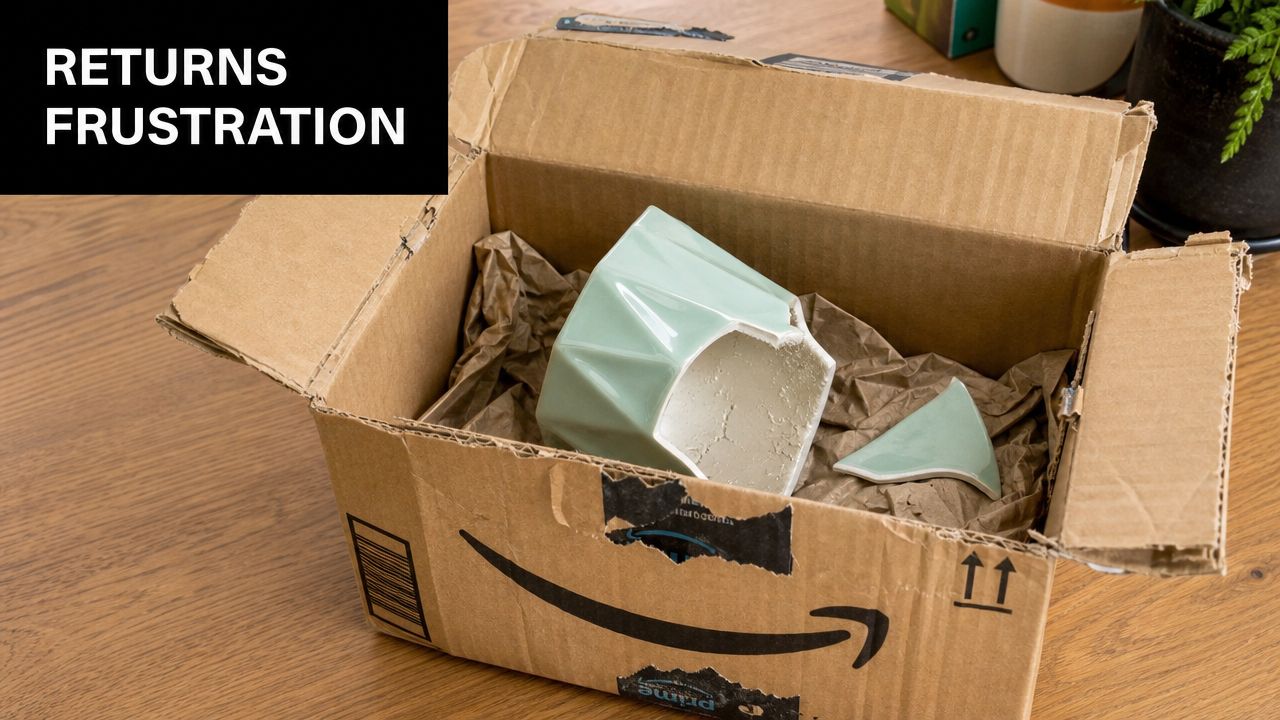
The legal and financial problem is that a return is rarely just a return. It can involve condition disputes, refund timing, inventory grading, restocking decisions, customer messaging limits, and later arguments over whether Amazon or the seller followed policy. If you sell fragile goods, apparel, electronics, collectibles, baby products, or seasonal inventory, the details matter even more.
Newer sellers often underestimate this because they learned Amazon from the sales side first. They focused on listings, Buy Box dynamics, ads, and launch tactics. If you’re still building your operation, a strong operational primer like this comprehensive guide for POD entrepreneurs can help you understand how product model, fulfillment setup, and category choices affect downstream risk, including returns.
Practical rule: If a return can affect your margin, your metrics, or your right to reimbursement, treat it like a business record, not a customer-service inconvenience.
Sellers who do well here usually follow three habits:
- They document before problems arise. Product-condition photos, packing records, serial or batch tracking where appropriate, and SKU-specific return notes make later appeals stronger.
- They separate policy from instinct. A return may feel unfair, but the question is whether it was out of policy, unsupported by evidence, or mishandled procedurally.
- They escalate selectively. Not every return justifies a fight. Some do. The hard part is knowing which ones threaten the business and which ones are part of marketplace friction.
The Amazon Return Ecosystem Explained
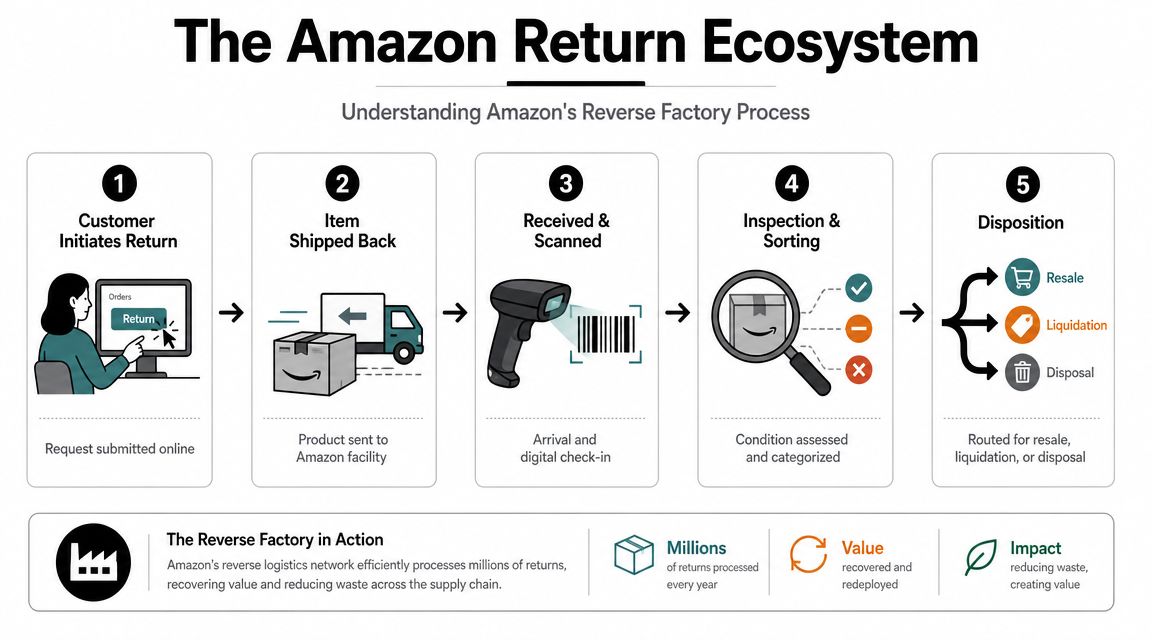
Amazon’s returns machine works like a reverse factory. The sale moves inventory outward. The return pulls it back into a controlled system designed to keep the customer experience easy while preserving as much product value as possible on the back end.
Amazon states that in major markets it has long emphasized convenient, low-friction returns for customers, offers free returns on most items delivered in the U.S., and routes returned items through dedicated return centers for inspection and disposition. Amazon also says the “vast majority” of returned items are ultimately resold as new or used, returned to selling partners, liquidated, or donated, and that return-center teams check packaging damage, broken seals, product-match accuracy, signs of use, and other damage before deciding next steps, as described in Amazon’s explanation of what happens to Amazon returns.
What the reverse factory is trying to do
Amazon’s system is balancing two priorities that often pull in opposite directions:
- Keep buyers comfortable ordering
- Recover value from returned inventory
That tension explains a lot of seller frustration. The platform wants the return process to feel simple on the customer side. It also wants returned units assessed fast enough to route them toward resale, partner return, liquidation, or donation. Sellers get caught where those priorities meet.
A typical return lifecycle looks like this:
- The buyer initiates the return. Amazon records the reason, refund path, and return method.
- The item moves back through Amazon’s intake channels. Depending on the order type, that may involve Amazon-managed or seller-managed handling.
- The return is scanned and inspected. This stage matters because it creates the operational record that later affects reimbursement and disputes.
- Amazon or the seller determines disposition. The item may be restocked, downgraded, sent back, liquidated, or treated as unsellable.
Why sellers need to think beyond refunds
Many sellers focus only on whether the buyer got money back. That’s too narrow. The key questions are these:
| Return stage | What sellers should watch |
|---|---|
| Return request | Whether the stated reason aligns with product history and listing content |
| Transit back | Whether the order is one where condition proof will matter later |
| Inspection | Whether the recorded condition will support resale, reimbursement, or dispute rights |
| Disposition | Whether the unit still has value and who controls the next decision |
The most effective operators build return-review procedures around SKU type, not just around dollar value. Fragile home goods need one workflow. Apparel with fit issues needs another. Serialized or collectible products need tighter proof standards. If you handle Fulfillment by Amazon inventory, this practical guide on how to handle FBA inventory returns is worth keeping bookmarked because the operational details after return intake can decide whether a loss is recoverable.
A return center decision is not just warehouse housekeeping. It can become the factual foundation for a reimbursement claim, a SAFE-T request, or a later legal dispute.
Navigating Key Policy Rules and Timelines
The mistake sellers make most often is assuming there is one return window. There isn’t. Amazon’s return rules change based on product class, fulfillment context, and seasonal exceptions. That means the first question in any dispute should be, “What kind of item is this under Amazon’s policy structure?”
According to ChannelReply’s summary of Amazon policy guidance, most items sold and fulfilled by Amazon are generally returnable within 30 days of receipt, while Amazon Renewed items sold by Amazon may be returnable for 90 days, holiday purchases can receive an extended window, and baby products often have longer allowances, as outlined in this review of the Amazon return policy explained.
The standard rule isn’t the whole rule
The public-facing shorthand is the 30-day return window. That’s useful, but incomplete. Once you identify the product category, your analysis changes. A longer category-specific window can affect whether the buyer is still within policy. It can also affect how you assess evidence and whether you should challenge the return at all.
For sellers, that creates a practical sequence:
- Identify the item class first. Don’t evaluate timeliness before you know whether the listing falls into a category with special treatment.
- Check the fulfillment method next. FBA, seller-fulfilled, and seller-fulfilled prime style workflows can create different documentation and handling realities.
- Review exception periods. Holiday timing and category-specific allowances often explain returns that look late at first glance.
Amazon Return Window and Policy by Category
| Product Category | Standard Return Window | Notes & Common Exceptions |
|---|---|---|
| Most items sold and fulfilled by Amazon | 30 days from receipt | This is the baseline rule many sellers know, but it doesn’t cover all categories |
| Amazon Renewed items sold by Amazon | 90 days | A materially longer window than standard items |
| Holiday purchases | Extended window | Seasonal timing can push eligibility beyond the normal period |
| Baby products | Longer allowances | Category treatment may be more flexible than the general standard |
The legal significance of these timelines is easy to miss. If a buyer’s return falls inside a valid exception, a seller who treats it as late may create a second problem by mishandling the communication or resisting a return that policy still permits. On the other hand, if the return is outside policy, the seller may have stronger grounds to document noncompliance, assess whether any restocking rule applies, or challenge a refund outcome.
Timelines affect proof and leverage
Timing changes more than eligibility. It changes advantage.
A prompt return usually preserves better evidence. Packaging is fresher, tracking is easier to reconstruct, and buyer communications are still close to the transaction. Older returns create fuzzier records and more room for dispute about condition, completeness, and causation. That’s why merchants with recurring return issues should align their internal policy review with their warranty and product-condition practices. This overview of return policy and warranty issues is useful if your Amazon returns overlap with broader consumer obligations on your own site or across channels.
When a seller says, “Amazon shouldn’t have accepted this,” the answer often turns on category classification and timing, not on whether the return feels reasonable.
A working checklist for sellers
Before you challenge any return, verify these points in order:
- The exact delivery date
- The product category and any special window
- Whether the order fell in a seasonal exception period
- The return reason selected by the buyer
- The condition in which the item came back
- Whether the unit is resellable, unsellable, incomplete, or mismatched
That sequence prevents emotional decisions. It also gives you a cleaner record if the issue later becomes a claim, appeal, or legal escalation.
How Returns Impact Your Seller Account Health
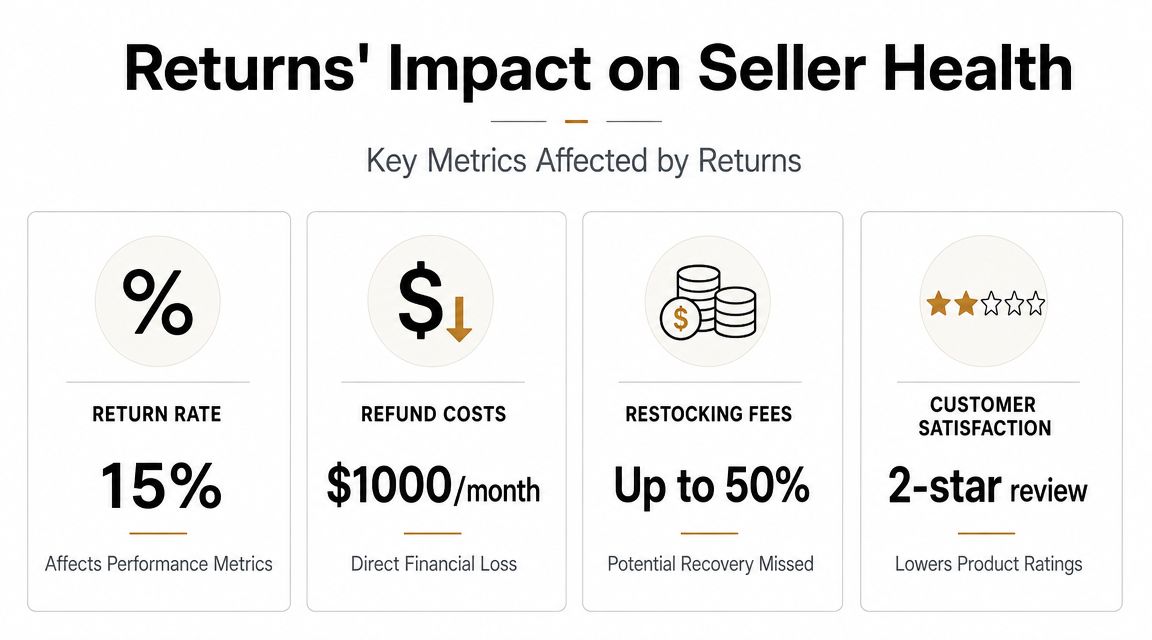
Returns don’t just reduce profit on one order. They affect how Amazon sees your operation. Sellers who ignore return patterns usually find out too late that the platform doesn’t treat returns as isolated events. It treats them as signals about listing quality, item condition, buyer expectations, and operational control.
That’s why amazon’s returns policy belongs in account-health management, not just customer service.
The direct financial pressure is getting tighter
A 2026 industry summary reports that Amazon began applying returns processing fees in June 2024 for ASINs whose return rates exceed category-specific thresholds, typically around 5% to 8% depending on category, with fees ranging from $0.50 to $2.00 per return. The same source says Amazon shortened the FBA reimbursement claim window from 18 months to 2 months, effective January 2025, according to Titan Network’s summary of Amazon return policy changes.
Those two changes matter together. The fee structure increases the cost of high-return ASINs. The shortened reimbursement window reduces the time sellers have to identify and correct missing or mishandled return-related losses. In practice, that means delay is more expensive than it used to be.
Returns damage more than margin
For most sellers, damage comes from how returns interact with other account signals:
- Listing quality issues can produce avoidable “not as described” returns.
- Packaging failures can turn a good product into a damage claim.
- Variation misuse can create buyer confusion that looks like a product problem.
- Slow internal review can cause missed reimbursement deadlines.
I’ve seen sellers obsess over ad spend while letting return analysis drift for weeks. That’s backwards. A product with recurring avoidable returns doesn’t just cost money. It can weaken the underlying listing, customer trust, and internal forecasting.
What proactive sellers actually do
The sellers who contain return damage usually build a simple control system around the SKUs generating the most friction.
| Risk area | What works | What fails |
|---|---|---|
| Product expectations | Rewrite titles, bullets, and images to match the real item | Leaving vague claims live because conversion still looks acceptable |
| Fit and selection | Add clearer sizing, compatibility, or use-case guidance | Assuming returns are just a customer habit |
| Damage prevention | Upgrade packaging and inspect outbound prep | Treating transit damage as unavoidable noise |
| Recovery rights | Audit reimbursements and returned-unit records quickly | Waiting until the claim window is nearly closed |
One overlooked lever is expectation-setting before the sale. Apparel, accessories, and style-led categories often suffer because buyers can’t picture the product on themselves or in context. Tools that help shoppers visualize outfits before buying can reduce mismatch-driven returns by improving pre-purchase clarity. That doesn’t eliminate legal risk, but it can remove a common source of preventable return friction.
Sellers lose return disputes long before the appeal if the listing, packaging, and order record never gave them usable evidence in the first place.
Why passivity is expensive
A passive seller waits for monthly summaries. A disciplined seller reviews return reasons by SKU, by category, and by fulfillment path. The difference is practical. One reacts after margin is gone. The other spots a pattern while there is still time to change packaging, adjust copy, disable a problematic variation, or tighten inbound quality control.
If one ASIN starts crossing category expectations for returns, treat it as a compliance and profitability issue immediately. Don’t assume the problem will wash out over time. Amazon’s system increasingly connects returns to fee exposure and reimbursement discipline. Sellers need to do the same.
Disputing and Appealing Problematic Returns
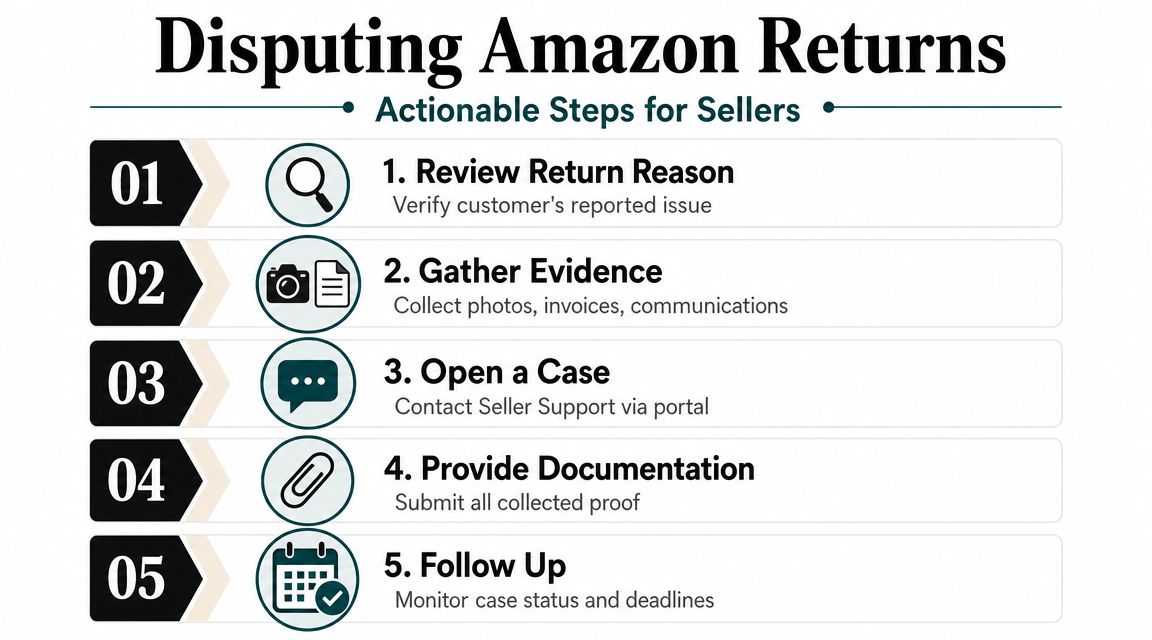
Not every bad return should become a formal dispute. Some returns are within policy, even when they’re annoying. Others involve evidence gaps you won’t overcome. The strongest challenges are the ones built on a clean record, submitted fast, and tied to a specific policy problem such as wrong item returned, item returned damaged, incomplete return, or a return accepted outside what the order history appears to support.
Start with the deadline and the policy status
Marketplace discussion and policy guidance show that the common “30-day Amazon return window” headline is incomplete. Some items may be accepted well beyond the standard period because of seasonal timing, while sellers may apply discretionary restocking fees or refuse certain late, unsellable, or incomplete returns in some situations. That’s why the question “Can Amazon still accept a return after the return window closes, and who decides?” keeps coming up in seller discussions, as reflected in this Seller Central forum discussion on late and exception returns.
If the return might still fall within an exception, don’t lead with outrage. Confirm the item class, timing, and order context first. If the return is out of policy or the item came back in a materially different condition, move quickly into documentation mode.
Build the record before you write the appeal
Use a repeatable evidence checklist. Don’t improvise after the fact.
- Photograph the shipping box first. Capture labels, damage, tampering, and condition on arrival.
- Photograph the contents as opened. Include packaging material, inserts, accessories, and the item itself.
- Compare what was returned to what was sold. Product identifiers, model details, colorway, components, and visible use all matter.
- Pull the order record. Save tracking, return reason, buyer messages, and fulfillment details.
- Preserve invoices or sourcing records if relevant. These can support authenticity or product-match arguments.
After that, write the claim in plain factual language. Avoid insults, theories, or broad accusations of fraud unless your evidence really supports them. Seller Support responds better to a concise record than to an angry narrative.
A simple structure works:
- State the issue
“The returned item does not match the item sold under this order.” - State the evidence
“Photos show different product characteristics and missing original accessories.” - State the requested outcome
“Please review for reimbursement or adjustment based on item mismatch and returned condition.”
Here’s a useful overview of Amazon seller appeals done right if you need a more formal framework for drafting claims and escalation language.
Use process discipline with SAFE-T and A-to-z matters
Sellers often mix up operational complaints with appeal-worthy claims. Keep them separate.
- For SAFE-T style reimbursement requests, focus on condition, mismatch, buyer misuse, or other concrete return defects supported by documents and photos.
- For A-to-z related responses, anchor your position to the order record, shipment proof, communication history, and policy compliance.
- For repeat issues on the same SKU, save a pattern file internally. A single return may look ambiguous. A recurring sequence of the same problem can reveal listing confusion or abuse.
This walkthrough may help if you want to see a seller-oriented explanation in action:
Keep your tone clinical. The best appeal reads like a record review, not a grievance letter.
What usually works and what usually doesn’t
| Approach | Likely result |
|---|---|
| Clear photos, timeline, item comparison, and targeted request | Better chance of meaningful review |
| Long emotional message accusing the buyer without proof | Weakens credibility |
| Immediate preservation of packaging and contents | Stronger factual record |
| Waiting days to inspect and document a questionable return | Lost evidence and weaker claims |
The point isn’t to dispute everything. It’s to dispute the right returns, with the right proof, in the right format.
When a Return Issue Requires Legal Counsel
Some return disputes stay operational. Others stop being routine the moment they threaten the business itself. Sellers often wait too long to recognize that shift. They keep opening support cases when the issue has already moved into withheld funds, systemic return abuse, listing contamination, or account-level consequences.
One recent reported development shows why sellers need to watch policy changes through a legal lens, not just a customer-service lens. Bellavix reported that Amazon is eliminating the long-standing high-value return-label exemption for US seller-fulfilled orders effective February 8, 2026, and shortening refund timelines from 14 days to 7 days. The same summary highlights a related seller concern about how returns interact with listing structure, refund liability, and review strategy, in this update on Amazon returns, reviews, and refunds changes for 2026.
The red flags that justify legal review
You should strongly consider legal counsel when the return issue is no longer about one order.
- Funds are being withheld at a meaningful level. At that point, the dispute may involve contract interpretation, evidence framing, and escalation beyond ordinary support channels.
- Amazon links return patterns to account-health consequences. If returns are now feeding into suspension risk or formal corrective-action demands, your response needs to be written with long-term account survival in mind.
- You suspect organized abuse or competitor interference. Repeated wrong-item returns, suspicious complaint patterns, or coordinated “not as described” allegations can require a strategy that goes beyond ticket-by-ticket replies.
- The return dispute overlaps with intellectual property or authenticity allegations. Those cases can quickly become more serious than ordinary refund disagreements.
Why Seller Support has limits
Seller Support can review operational facts. It is not built to protect your business in the way counsel can. Support teams generally won’t develop a legal theory, preserve a broader evidentiary narrative, or frame a dispute around contract rights, procedural fairness, reputational harm, or linked business exposure across multiple ASINs.
That matters when the platform’s internal notes, automated decisions, and policy interpretations start affecting more than one transaction. At that stage, every written statement should be deliberate. Casual admissions, incomplete explanations, or poorly framed appeals can make later correction harder.
If the issue can shut down sales, freeze funds, or damage your brand position, self-help may cost more than professional review.
What legal counsel can actually do
Counsel is most useful when the seller needs a disciplined, documented escalation. That may include:
| Situation | Why legal input helps |
|---|---|
| Account suspension tied to return-related performance concerns | The response must address root cause, corrective action, and future controls without creating new exposure |
| High-value or repeated return fraud | Counsel can help frame evidence, preserve records, and escalate the dispute coherently |
| Refund liability disputes with broader business impact | A lawyer can analyze contractual posture and communication strategy |
| Returns tied to IP, authenticity, or review manipulation concerns | These issues can affect listings, funds, and marketplace standing at the same time |
A good rule is simple. If the return dispute now touches account access, withheld money, systematic abuse, or legally sensitive accusations, stop treating it as a standard customer-service workflow.
Answering Common Seller Questions About Returns
Should I use returnless refunds
Sometimes. Returnless refunds make sense for low-resale, low-cost, fragile, or hygiene-sensitive items where return shipping and inspection create more cost than value. They are risky when used carelessly because they can hide product-quality problems and invite opportunistic behavior on certain SKUs.
If you use them, limit them by product type, condition logic, and reason code. Review the affected ASINs regularly. A returnless refund should be a deliberate tool, not a default convenience.
Can I charge a restocking fee
Sometimes, but only when the policy context supports it. The key issue is whether the return falls into a situation where Amazon permits seller discretion on restocking or refusal, particularly with certain late, incomplete, or unsellable returns. Don’t impose a fee because you feel the return was unfair. Tie the decision to the applicable rules and preserve evidence of the returned condition.
What do I do when the buyer sends back a different item
Document first. Photograph the outer packaging, internal packaging, the returned item, and any missing components before anything gets separated or discarded. Then compare the return against the order record and product identifiers, and submit a focused claim or appeal with attachments. Avoid broad allegations. State the mismatch clearly.
When should I stop handling returns internally
Stop when the issue moves beyond isolated order cleanup and begins affecting money, account standing, or allegations that carry legal consequences. If you’re dealing with withheld funds, repeat abuse, authenticity disputes, or suspension risk, the quality of the written response matters as much as the facts.
What is the biggest mistake sellers make with amazon’s returns policy
They wait too long. They inspect too late, appeal too loosely, and miss the moment when an operational issue becomes a legal and financial one. The sellers who protect themselves best build evidence habits before they need them.
This article is for informational purposes only and not legal advice. Reading it does not create an attorney-client relationship. No attorney client relationship exists based on the review of this article, and none of the information in this article is legal advice.
If amazon’s returns policy has led to withheld funds, account suspension, repeat return abuse, or a dispute you can’t resolve through normal channels, LA Law Group, APLC can evaluate the situation and help you understand your options. Their team works with eCommerce businesses facing platform disputes, seller account problems, and related business-risk issues across California.
Attorney Advertising. This article is general information, not legal advice, and does not create an attorney-client relationship. Prior results do not guarantee a similar outcome.